
WHAT’S NEXT JOURNAL: VOL. 6 August 2026
THE MANY LIVES OF WORK
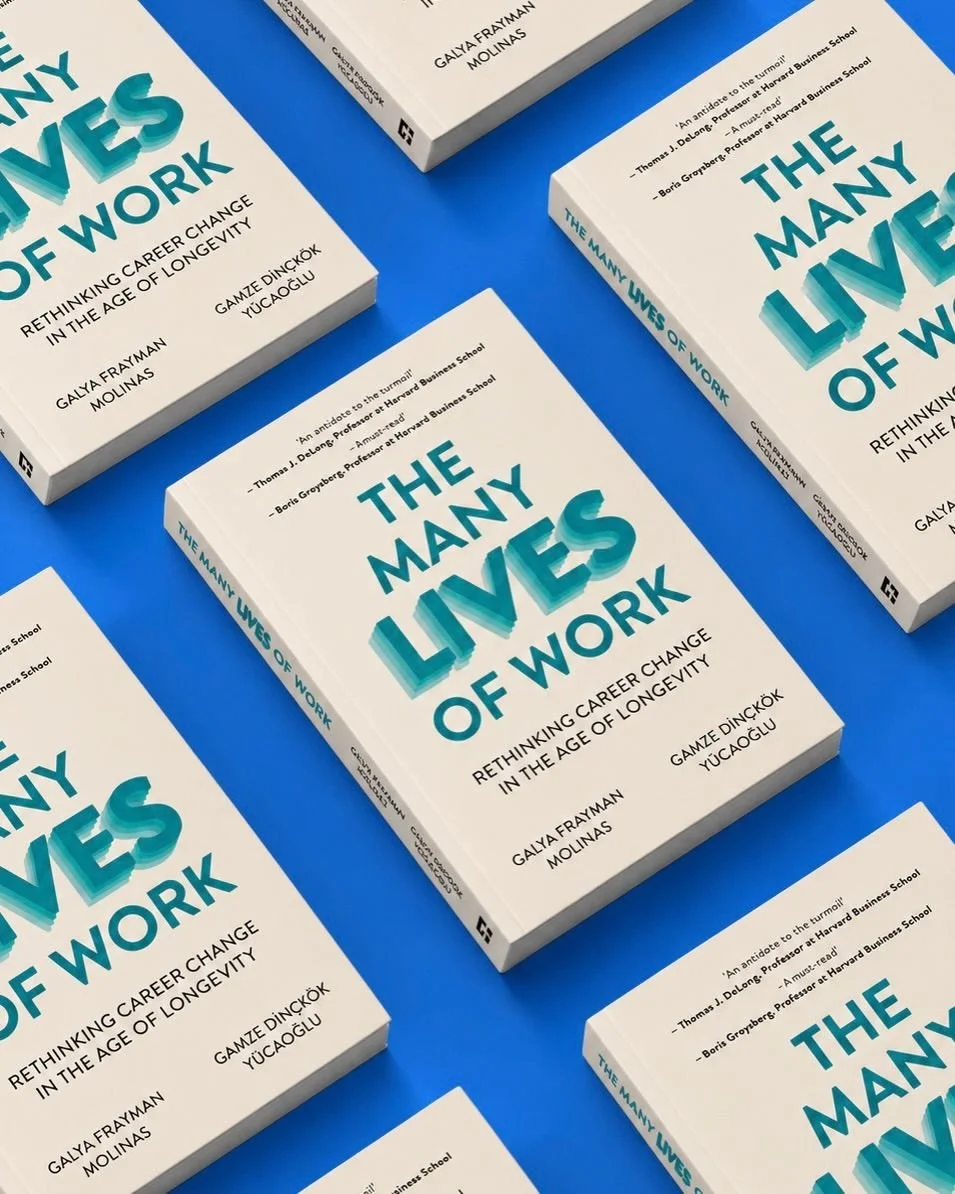
Last month, we shared that we were excited about a publication coming. Now, we can finally tell you more!
The Many Lives of Work will be published on October 15th. The book grew out of a question that has shaped much of our work at What’s Next: what happens to our working lives when lives get longer, but the career model stays the same?
For generations, working life followed a relatively predictable sequence: Education–Career-Retirement. Progress was measured through continuity and upward movement, while pauses, changes of direction and new beginnings were treated as deviations from the plan. That architecture belongs to a different era.
Longer lives are creating longer careers, more transitions and more opportunities to rethink how, why and for how long we work. They are also exposing how our institutions, organisations and assumptions are not sufficiently prepared for this reality.
The Many Lives of Work offers a new way of looking at careers in the age of longevity..
In recent days we were finally able to share our long awaited book cover with you. They do say not to judge a book by its cover, but we are excited about sharing ours as well as its contents.
Follow this space and find us on Instagram at @w_next, where we will be sharing more updates as we move closer to 21 September and open pre-orders.
More very soon.
WHAT’S NEXT, NOW
Our refreshed website is now live at w-next.co.
It brings together the body of work we have been building around longevity and careers: our Perennial Careers framework, think pieces, Journal archive and, increasingly, the ideas behind The Many Lives of Work.
What’s Next began with a focus on career transition. The questions have since become larger.
How should careers change when working lives span five or six decades? What happens when the traditional middle of a career is no longer really the middle? How do organisations develop and retain workforces in the age of longevity? What new structures do people need to keep learning, contributing and changing direction across longer lives?
Those are the questions that shape what’s next.
TWO PERENNIAL LIVES
Within days of one another, the world lost two women whose working lives resisted the idea of a prescribed ending.
Dolly Parton (1946–2026)
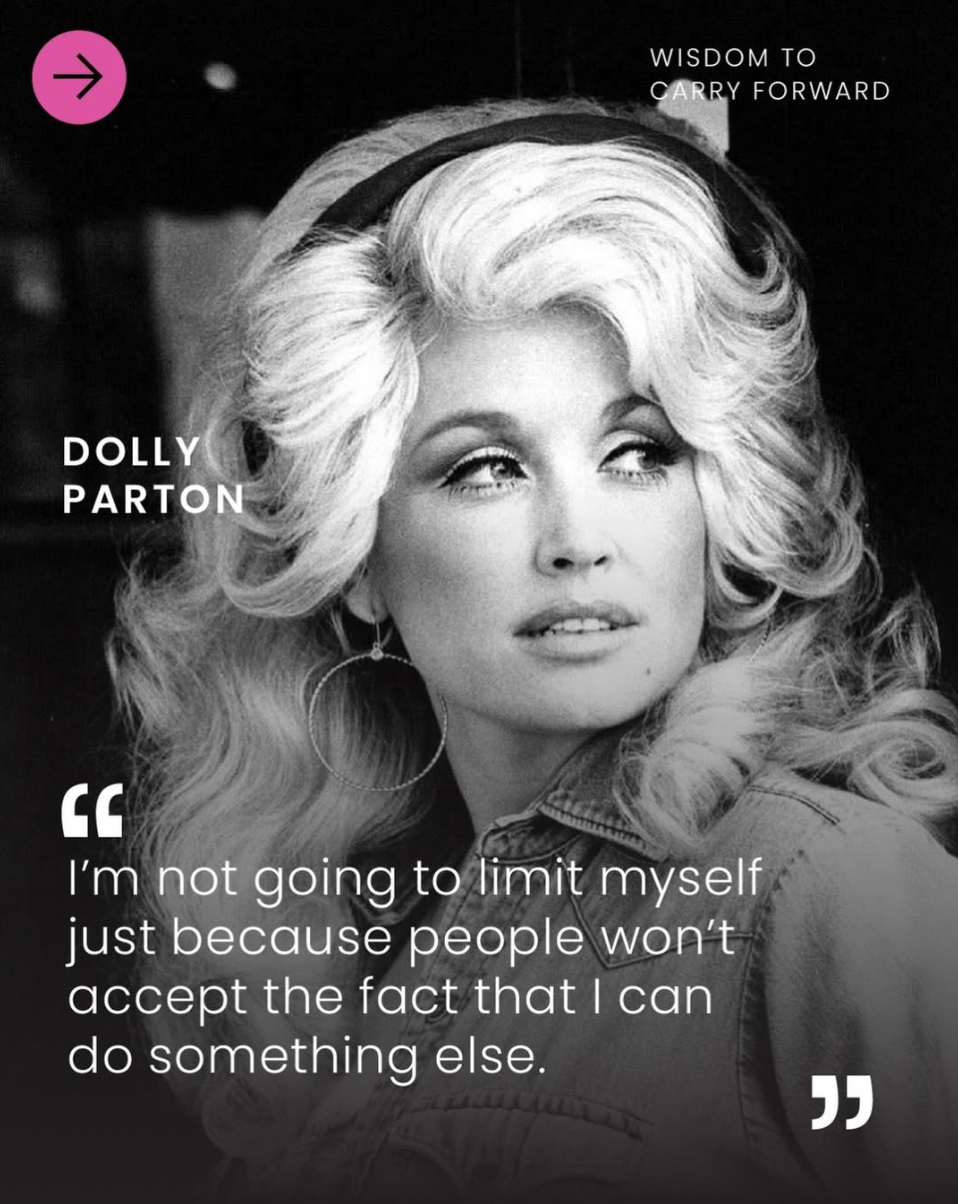
Dolly Parton built a career over seven decades without ever becoming fixed by the identity that first made her famous. Music led to film, business, philanthropy, literacy advocacy and new creative work, each chapter extending rather than replacing what came before.
Her life offers an important distinction: reinvention does not have to mean becoming someone else. Sometimes it means finding new expressions of what has been there all along.
“Find out who you are and do it on purpose.”
Gloria Steinem (1934–2026)
Gloria Steinem was still writing at 92. She co-founded Ms. in her thirties, published My Life on the Road in her eighties, and completed another memoir in the final year of her life. Her work changed form across decades while remaining anchored in the same questions of equality, freedom and agency.
Her final memoir, An Unexpected Life, is being published posthumously this month.
“Dreaming, after all, is a form of planning.”
Neither life followed a neat arc of ascent, peak and retreat. Perhaps that is the more useful way to think about a perennial career: not endless productivity, but the continuing possibility of growth, renewal and contribution across a life.
OUR WRITING
You Are Not Overqualified. You Are Mis-Described.
“Overqualified” is often treated as a problem of fit. We argue that it is more often a problem of description.
The conventional CV was built for linear careers: titles accumulate, responsibilities expand, progression moves upward. What it struggles to capture is what decades of experience actually produce, from judgment and pattern recognition to relationship capital and the ability to navigate ambiguity.
As careers become longer and less linear, experienced professionals need a different vocabulary for articulating value. The question is no longer simply what roles someone has held, but what those years have made them capable of seeing, deciding and solving.
Read the full piece on LinkedIn.
Longer Lives, Interrupted Careers: The Gender Gap Inside the Longevity Economy
Longer lives may create more time, but they do not create equal opportunity within it.
Women are more likely to experience career interruptions through childcare, caregiving, reduced hours and time out of paid work. The interruption may end, but its effects continue through missed progression, lower earnings, weaker pension accumulation and more difficult re-entry.
By midlife, those penalties have compounded. Women are then expected to work for longer while navigating both age bias and gender bias at once.
This makes career inequality a longevity issue. If longer working lives are becoming the norm, organisations and policymakers will need to stop treating nonlinear careers as broken ones and start designing for re-entry, reskilling, flexibility and renewed progression across a longer workspan.
Read the full piece on LinkedIn.
WHAT THE EVIDENCE IS TELLING US
Our reading this month kept returning to the same problem: careers are getting longer, but many of the assumptions around them have not changed.
Research on the “pivotal 40s” points to a stage of working life marked by high responsibility, significant personal pressure and very little space for reflection. Yet this is precisely when many professionals may need to reassess the next 20 or 30 years of work. Career exploration is still concentrated at the beginning of working life, as though direction only needs to be considered once.
The same mismatch appears inside organisations. Research on multigenerational workplaces suggests that many tensions attributed to age are more accurately problems of leadership, trust and organisational design. At the same time, capabilities that become more valuable with experience, including judgement, pattern recognition and contextual thinking, are becoming more important as AI changes the nature of work.
We also looked at why mid-career women are moving into entrepreneurship. The answer was not a loss of ambition, but a search for greater control over how work fits alongside the rest of life. Flexibility, in this context, is not a concession. It is becoming part of the architecture required to retain experienced talent.
Even the idea of “middle age” itself is shifting. If people are living longer and careers increasingly span five or six decades, our forties can no longer be treated as the beginning of professional decline.
Taken together, the evidence points in one direction: longer lives require us to redesign not only how long we work, but how careers develop, pause, adapt and renew across time.
BEFORE WE GO
One idea has stayed with us this month.
For most of the twentieth century, a successful career was supposed to demonstrate continuity. Longer lives are beginning to demand something different: the ability to evolve without discarding everything that came before.
Growth. Pause. Renewal. Reinvention.
These are not interruptions to a working life. Increasingly, they are the working life.
On 21 September, we will have much more to share.
Until then, thank you for reading.
What’s Next explores how longer lives are reshaping careers, work and the choices we make across a working lifetime.
