
WHAT'S NEXT JOURNAL: VOL. 3 - May 2026
A NOTE FROM US:
This month, while we read and wrote on different aspects of work and longevity, one theme kept resurfacing for us: how professionals in midlife are leaning into the changing structure of work. A conversation that captured this came from a LinkedIn piece by our co-founder Galya Frayman Molinas on the rise of fractional work among experienced professionals. What resonated was not just the model itself, but what it signals. As careers become longer, many professionals are moving away from the idea of a single, linear path toward something more modular: fractional work shaped by autonomy, flexibility, and experience.
The response suggested something larger may be happening. Increasingly, people are not just changing careers. They are rethinking the structure of their career itself. And, as careers become longer, less linear, and more self-directed, supporting people to navigate this shift is exactly why What's Next Initiative exists.
HAPPENING AT WHAT’S NEXT
Recently, our co-founder Gamze Dinckok Yucaoglu was featured in CXO Dispatch in a conversation about midlife careers, longevity, and why career reinvention deserves a new narrative.
The interview explored one of the questions at the heart of What's Next: what happens when longer lives collide with career models that were never designed for them? Gamze discussed the myths that continue to shape perceptions of midlife, the growing importance of reinvention as a professional skill, and why experience is one of the most undervalued assets in the future of work.
Watch and read the full feature here: "Why Midlife Is Not the End of Your Career, But the Beginning of Your Best One."
OUR RESEARCH: Think Pieces by What’s Next
The Longevity Paradox: Longer Lives, Narrowing Opportunity
We are living and working longer, but opportunity still narrows sharply after midlife. Research shows employment typically peaks around 45, then declines. Not because capability disappears, but because access does. Subtle age signals embedded in hiring language and reduced investment in training contribute to this shift, even as organisations face skills shortages. The result is a widening gap between extended longevity and shrinking work opportunity. A system designed for shorter lives is struggling to absorb longer ones. Read the full piece here.

The “Peak” Question Is the Wrong Question: What Neuroscience Says About the Midlife Brain
The narrative of cognitive decline at midlife is more cultural than scientific. While certain abilities associated with speed and memory do peak earlier in life, research shows that judgment, emotional regulation, pattern recognition, and accumulated expertise continue developing well into later adulthood. The result is a more nuanced picture of capability, one that values integration over speed. In a world increasingly shaped by AI, this distinction matters. Many of the qualities organisations need most are not those that peak first, but those that take decades to build. Read the full piece here.
ARTICLE INSIGHTS: What We’ve Been Reading
Kate Winget and Anthea Tjuanakis Cox for Fortune 2026
A clear argument that benefits design is becoming a core retention issue in a longer-living workforce. This Fortune commentary highlights a striking signal: 91% of employees say they would stay longer if benefits reflected their long-term needs. Yet most benefit systems are still designed around a life course that no longer reflects reality. While most organisations still operate with a three-stage model of learn, work, retire, employees are navigating far more complex, multi-decade decisions across health, caregiving, equity, and financial planning. The real shift is from expanding benefits to improving decision support at key life and work transitions. In a multi-stage workspan, the systems built to support careers are increasingly out of sync with how those careers actually unfold. Read the full piece here.
Avivah Wittenberg-Cox for Forbes 2025
A timely reflection on the surge of books exploring longer lives, ageing workforces, and the future of work. Taken together, they signal a field that is rapidly moving from niche discussion to urgent mainstream agenda.
What stands out is not only the volume of work, but the diversity of perspective: from workforce strategy to individual reinvention, from cultural narratives of aging to institutional readiness. Each lens adds clarity, but none is sufficient on its own. The convergence suggests a shared recognition that the implications of longevity can no longer be deferred. A useful map of where the field is heading. Certainly worth reading in full. Read the full piece here.
THE NEXT SHELF: Titles On Our Radar
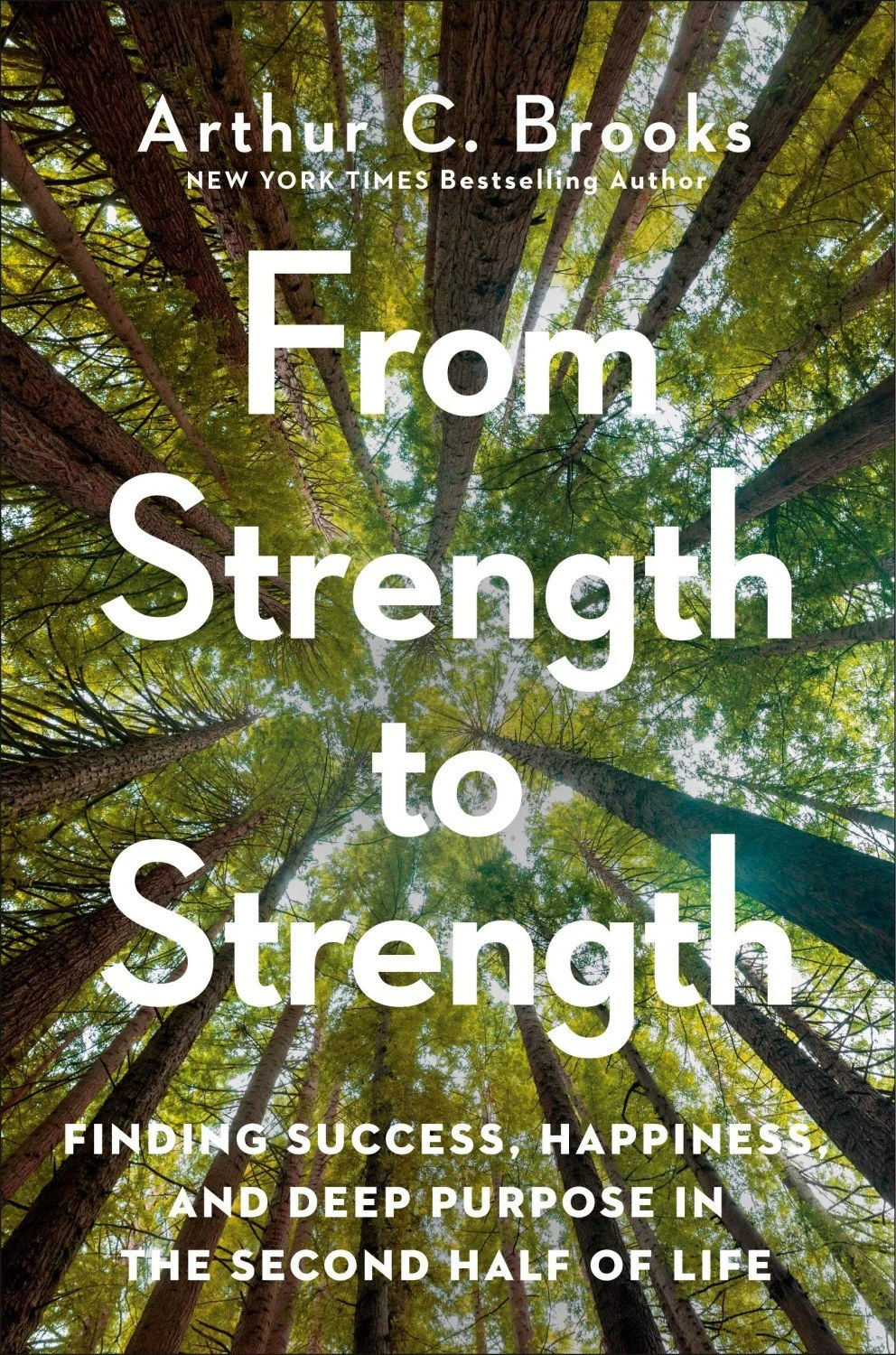
From Strength to Strength - Finding Success, Happiness and Deep Purpose by Dr. Arthur Brooks
Few writers have approached the second half of life with the clarity Dr. Arthur Brooks brings to it. A Harvard University professor, social scientist, and The Atlantic 's happiness columnist, Brooks built From Strength to Strength from a personal reckoning: the realisation, in his own midlife, that the professional skills that had carried him for decades were beginning to fade — and that almost no one was talking honestly about it.
The book draws on social science, philosophy, theology, and eastern wisdom to make a difficult argument: that professional decline is real, inevitable, and arrives earlier than most of us expect. He proposes a framework — built around the shift from fluid intelligence to crystallised intelligence — that reframes the second half of life not as a slow fade, but as a different kind of contribution entirely. An honest, useful, and hopeful read on what it means to keep working, contributing, and finding meaning across a long life.
SOMETHING TO THINK ABOUT
Where in your working life are you still following a structure that no longer reflects the reality of how you live, think, or want to work? What would change if you treated your career less like a path to follow, and more like something to design?
Navigating a career transition or know someone who is? Share this with them, follow us on LinkedIn and Instagram, or drop us a line at hello@w-next.co.
What's Next is a platform for professionals navigating midlife career transitions, grounded in research, built for connection, and committed to making reinvention feel less like a crisis and more like a design choice.